

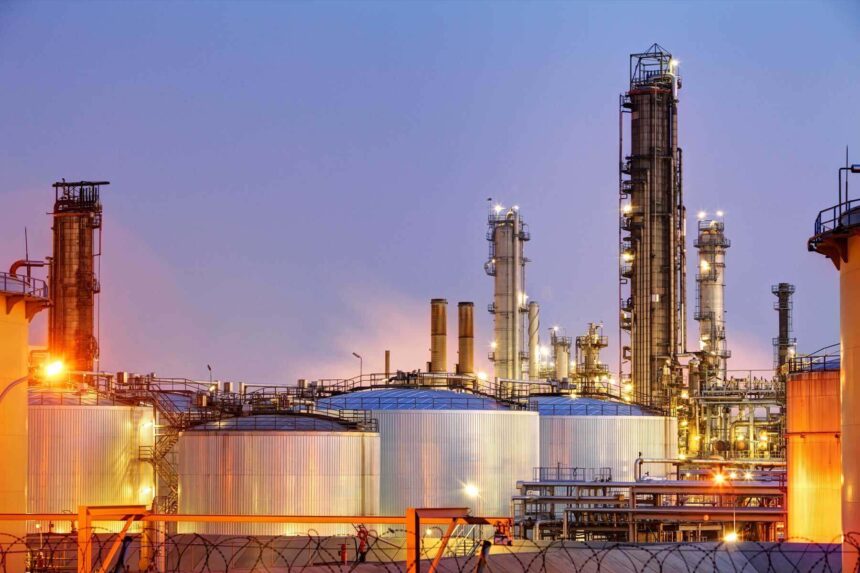
The landscape of industrial decarbonization has undergone a massive transformation as we move through the first month of 2026. For energy executives, project developers, and institutional investors, the primary focus has shifted from the initial excitement of project announcements to the grueling reality of long-term operational compliance. At the center of this shift is Carbon Capture and Storage, or CCS, a technology that has transitioned from an experimental niche to the bedrock of global climate finance.
- The High Stakes of Carbon Capture in 2026
- Identifying the Fatal Flaws in 45Q Compliance
- Navigating the New EPA Primacy in Texas and the Gulf
- The Technical Reality of Monitoring, Reporting, and Verification
- Bridging the Gap Between Engineering and Finance
- The Future of Carbon Intensity Scores and 45Z Credits
- Strategic Solutions for Permanent Sequestration Integrity
- Closing the Gaps: A Call to Action for 2026
As billions of dollars flow into the sector, primarily driven by enhanced tax incentives in the United States and similar mechanisms abroad, a new and dangerous set of risks has emerged. A recent industry analysis has highlighted several costly gaps that currently threaten the viability of these multi-billion-dollar ventures. These gaps are not just technical or engineering hurdles. They are fundamental disconnects between project insurance, regulatory oversight, and the financial requirements of tax credit eligibility. To safeguard the future of carbon management, stakeholders must bridge these divides or face the devastating prospect of credit recapture and financial insolvency.
The High Stakes of Carbon Capture in 2026
By January 10, 2026, the global capacity for carbon capture has reached record highs, yet the pressure to perform has never been greater. The financial engine driving this growth in the United States is the Section 45Q tax credit. Under the current 2026 guidelines, projects that successfully sequester carbon in secure geological formations can claim up to $85 per metric ton, while those utilizing carbon for enhanced oil recovery or other industrial uses can claim up to $60 per metric ton.
These credits are the lifeblood of the industry. They provide the necessary cash flow to offset the high capital expenditures and operational costs associated with capturing carbon at the source. However, the 12-year window for claiming these credits is fraught with peril. The Internal Revenue Service, or IRS, has established strict “recapture” rules. If captured carbon is released back into the atmosphere or if a storage site fails to meet rigorous monitoring standards, the developer may be forced to pay back years of previously claimed credits. This “recapture risk” is the primary gap that is currently keeping investors awake at night.
Identifying the Fatal Flaws in 45Q Compliance
The core issue facing the industry today is a phenomenon known as fragmented risk management. In the early days of CCS, developers often treated different aspects of their projects as isolated silos. They had a team for engineering, a team for geological surveying, and a team for tax compliance. In 2026, we are seeing that this lack of integration is the greatest single point of failure for large-scale projects.
According to a pivotal report from Insurance Business, many CCS projects are currently operating with significant insurance gaps. Historically, a developer might purchase a standard pollution liability policy, a separate construction policy, and a third policy for operational errors. The “gap” occurs in the transition between these stages or in the definitions used by different carriers. If a leak occurs during the injection phase, a standard pollution policy might cover the physical cleanup, but it often fails to cover the resulting loss of the tax credit. When the financial model of the project is built entirely on the value of that credit, the loss of insurance coverage for recapture can lead to a cascading financial failure.
The Problem of Siloed Insurance Coverage
In the current market, the insurance industry is struggling to keep pace with the technical complexities of CCS. Traditional underwriters are often comfortable with “known” risks like fires or mechanical breakdowns. However, the geological risk of carbon sequestration spans centuries, not just the duration of a policy.
- Construction vs. Operation: There is often a lack of continuity as a project moves from the construction phase to the “in-service” date. If an error in well design is discovered after the credits have started to accrue, the construction policy may have expired, and the operational policy may exclude “pre-existing conditions.”
- Regulatory Shifts: The EPA and state regulators are constantly updating the requirements for Class VI injection wells. A project that was compliant in 2024 might find itself out of compliance by 2026 due to new monitoring protocols. Most insurance policies do not automatically adjust to cover the costs of these new regulatory mandates.
- Credit Recapture Protection: This is the most significant gap. Tax Credit Insurance, or TCI, is a specialized product that is still relatively scarce in the high-capacity market. Without TCI that specifically covers the 45Q recapture risk, the project’s tax equity investors are exposed to billions of dollars in potential losses.
Navigating the New EPA Primacy in Texas and the Gulf
A major development in early 2026 is the shift in regulatory authority. As of this week, the Environmental Protection Agency has significantly expanded “primacy” to several key states, most notably Texas. This means the Texas Railroad Commission now has the primary authority to issue permits for Class VI wells, which are the wells specifically designed for long-term carbon storage.
While this is intended to speed up the permitting process, it introduces a new layer of compliance risk. Developers who were accustomed to federal EPA oversight must now navigate state-level bureaucracy, which often has different reporting cadences and environmental standards. The gap here is one of institutional knowledge. Many developers do not have the internal expertise to manage the transition from federal to state primacy, leading to delays in “safe harbor” filings and potential disqualification from the 2026 construction deadlines.
The Impact on Project Timelines
The race to meet the construction commencement deadlines has created a massive backlog of applications. In the Gulf Coast region alone, there are over 100 active Class VI applications pending. For a project to remain eligible for the full value of the 2026 credits, it must prove it has “begun work” in a meaningful way. This involves not just breaking ground but also meeting the 5% safe harbor expenditure rule. Any delay in permitting from the state can prevent a developer from meeting these financial milestones, thereby permanently reducing the project’s internal rate of return.
The Technical Reality of Monitoring, Reporting, and Verification
The integrity of a CCS project rests on Monitoring, Reporting, and Verification, or MRV. This is the process by which a developer proves to the government and the public that the carbon they captured is still where it belongs: deep underground.
In 2026, the technical barriers to MRV are becoming more apparent. Deep saline aquifers and depleted oil reservoirs are complex geological structures. Carbon dioxide is often injected at supercritical pressures, which can cause subtle changes in the subsurface environment. If these changes are not monitored with extreme precision, the project risks a “leakage event.”
The Challenge of Corrosive Environments
When CO2 is injected into the ground, it often mixes with formation water to create carbonic acid. This acid is highly corrosive to the carbon steel traditionally used in oil and gas wells. We are seeing a “costly gap” in the maintenance budgets of many 2026 projects, as operators realize they must use more expensive corrosion-resistant alloys, or CRAs, for their well linings and pipelines. Projects that cut corners during the initial design phase are now facing high remediation costs as their infrastructure begins to degrade faster than anticipated.
AI and 4D Seismic Monitoring
To address these technical gaps, the industry is turning to advanced technology. By January 2026, 4D seismic monitoring has become the gold standard. Unlike traditional 3D seismic, which provides a static picture of the subsurface, 4D seismic adds the element of time. This allows operators to watch the “carbon plume” as it moves through the reservoir in real-time.
Furthermore, AI-driven predictive modeling is being used to identify potential leak paths before they occur. Companies like Great American Insurance and Allianz are increasingly requiring developers to utilize these high-tech monitoring solutions as a condition of providing coverage. The gap between “low-tech” legacy projects and “high-tech” modern projects is widening, with the former finding it increasingly difficult to secure affordable insurance.
Bridging the Gap Between Engineering and Finance
One of the most profound insights from the recent industry reports is that CCS is no longer just an engineering challenge. It is a complex financial instrument. The “costly gaps” often arise because the engineers on the ground do not fully understand the financial implications of their technical decisions.
For example, a decision to slightly alter the injection pressure to save on energy costs might seem like a smart engineering move. However, if that pressure change triggers a reporting requirement under the EPA’s Subpart RR, and that report is filed late, it could jeopardize the entire year’s worth of 45Q credits. The communication gap between the field office and the CFO’s office is a major source of risk in 2026.
The Role of Integrated Risk Solutions
The solution being proposed by leading experts is the “Integrated Risk Model.” This approach brings together insurance brokers, tax attorneys, geological engineers, and compliance officers at the very beginning of the project lifecycle.
Instead of buying five different insurance policies from five different carriers, developers are seeking “all-in-one” solutions that cover the project from the “cradle to the grave.” This includes coverage for:
- Professional Liability: Protecting against errors in geological modeling.
- Environmental Impairment Liability: Covering the costs of remediation in the event of a leak.
- Tax Indemnity: Protecting the value of the credits if the IRS challenges their validity.
- Business Interruption: Covering the lost revenue if a regulatory order shuts down the injection well.
By closing these gaps through integrated solutions, developers can provide the certainty that tax equity investors and lenders require to fund these massive undertakings.
The Future of Carbon Intensity Scores and 45Z Credits
As we look further into 2026, the focus is expanding beyond 45Q to include the Section 45Z Clean Fuel Production Credit. This is particularly relevant for the ethanol and sustainable aviation fuel, or SAF, industries. These producers are using CCS to lower their “Carbon Intensity” or CI score.
The 45Z credit is value-based, meaning the lower the CI score of the fuel, the higher the credit. This creates an even stronger incentive for perfect compliance. If a CCS project attached to an ethanol plant has a “gap” in its sequestration reporting, the plant’s CI score will spike, and its 45Z credits will vanish. This interdependency between different credit regimes is a new frontier of risk for the biofuels sector in 2026.
Live Daily Update: January 10, 2026
Today’s market reports indicate that the price of voluntary carbon offsets for technology-based removals has hit a new high of $210 per ton. This price surge is driven by corporate buyers who are looking for “high-permanence” removals to meet their net-zero targets. For CCS developers, this provides a lucrative secondary revenue stream that can supplement their tax credit income. However, these voluntary buyers are even more demanding than the IRS. They require third-party verification that is often more rigorous than government standards, further highlighting the need for flawless MRV protocols.
Strategic Solutions for Permanent Sequestration Integrity
To ensure the long-term viability of carbon capture and storage, the industry must adopt a more holistic view of project integrity. This involves moving beyond simple compliance and toward a culture of operational excellence.
- Standardization of Data: There is an urgent need for standardized data formats for MRV reporting. Currently, different states and federal agencies require data in different formats, creating a “data gap” that increases the risk of filing errors.
- Long-Term Stewardship Funds: Some states, like North Dakota, have established stewardship funds that take over the long-term liability of a storage site after it has been safely closed for a set period. Expanding these programs to other states would close the “tail risk” gap that currently prevents some investors from entering the market.
- Workforce Development: There is a significant shortage of qualified Class VI well operators and subsurface carbon engineers. The “human capital gap” is leading to higher labor costs and a higher risk of operational errors.
Closing the Gaps: A Call to Action for 2026
The potential of carbon capture and storage to mitigate climate change is undeniable, but its success depends on the stability of its financial and regulatory foundations. The gaps we have identified: fragmented insurance, technical monitoring challenges, and regulatory shifts: are significant, but they are not insurmountable.
As we move forward into the rest of 2026, the winners in this space will be the companies that recognize the interconnected nature of these risks. They will be the ones who invest in high-fidelity monitoring, seek out integrated insurance products, and maintain a direct line of communication between their technical teams and their financial advisors.
The “costly gaps” of today are the opportunities of tomorrow. By addressing these issues head-on, the CCS industry can secure its place as a cornerstone of the global economy for decades to come.