

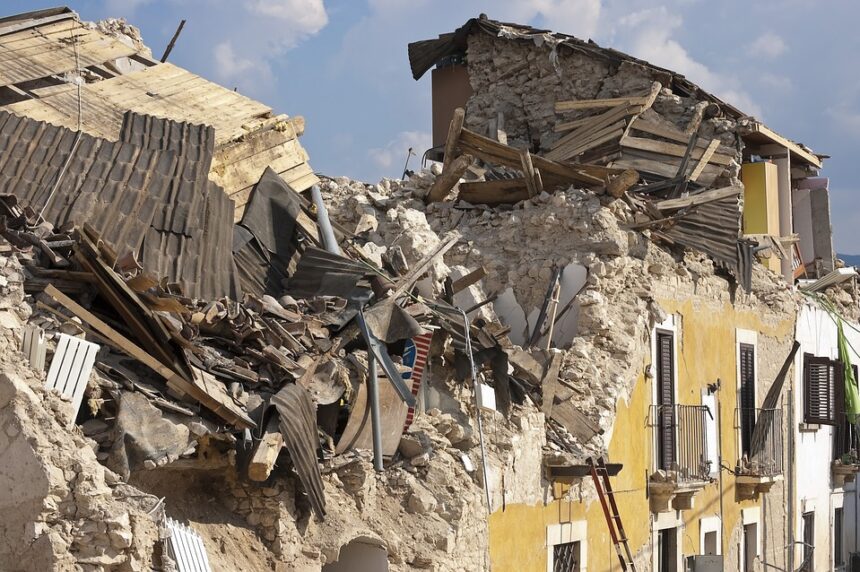
The ground beneath our feet often feels like the only constant in an ever changing world. Yet, as recent seismic events have shown, that stability is a fragile illusion. For many homeowners, the question of whether to invest in earthquake insurance is no longer a peripheral concern but a central pillar of financial planning. As we navigate the complex landscape of natural disasters in 2026, understanding the nuances of seismic protection is essential for anyone looking to safeguard their most significant asset: their home.
- The Current State of Global Seismic Activity: Live Updates
- The Great Insurance Misconception
- Breaking Down Earthquake Insurance Coverage
- 1. Dwelling Coverage
- 2. Personal Property Coverage
- 3. Loss of Use or Additional Living Expenses
- 4. Building Code Upgrades
- The Financial Landscape: Market Trends for 2025
- Understanding the Deductible Structure
- Regional Risk Assessment: Who Is Most at Risk?
- The Role of Seismic Retrofitting
- Is Earthquake Insurance Necessary for You?
- The Conclusion on Seismic Protection
In this comprehensive guide, we will analyze the current state of global seismic activity, the intricate details of insurance coverage, and the financial metrics that determine whether this specific type of protection is a necessity for your household.
The Current State of Global Seismic Activity: Live Updates
Seismic activity is a daily reality, and the final weeks of 2025 have been particularly active. On December 24, 2025, a magnitude 3.1 earthquake struck near San Ramon, California. While this event was relatively minor in terms of magnitude, it serves as a persistent reminder of the pressure building along the Calaveras and Hayward faults. This follows a larger magnitude 4.0 event in the same region just days earlier, signaling a period of increased crustal adjustment in the San Francisco Bay Area.
Further north, the seismic landscape is even more dramatic. Earlier this month, a powerful magnitude 7.0 earthquake occurred near the Hubbard Glacier on the Alaska Yukon border. This event was not just a geological curiosity; it triggered massive avalanches and serac falls, highlighting how seismic energy can cause secondary disasters in warming climates. Geologists from the Yukon Geological Survey are currently analyzing the data to understand the long term implications of such high magnitude events on glacial stability.
On a global scale, the Ring of Fire remains intensely active. On December 22, 2025, a magnitude 6.5 earthquake rattled the Eastern Highlands Province of Papua New Guinea. Although the depth of 110 kilometers mitigated the surface damage, the energy released was substantial. These events, occurring across the globe within a single week, underscore the fact that earthquakes do not follow a predictable schedule. They are random, powerful, and potentially devastating.
Source: USGS Latest Earthquakes Map
The Great Insurance Misconception
One of the most dangerous myths in the world of property management is the belief that a standard homeowners insurance policy covers earthquake damage. This is a profound misunderstanding that has led to financial ruin for thousands of families in the past.
Almost every standard homeowners policy contains an “Earthquake Exclusion” clause. This means that if a seismic event causes your walls to crack, your foundation to shift, or your entire structure to collapse, your primary insurance provider will likely deny the claim entirely. Standard policies are designed to cover fires, windstorms, and theft, but they specifically omit “earth movement.”
Interestingly, there is one exception: fire. If an earthquake causes a gas line to rupture and your home catches fire, the fire damage is usually covered under your standard policy. However, the damage caused by the shaking itself remains your personal financial responsibility unless you have a dedicated earthquake endorsement or a separate policy.
Breaking Down Earthquake Insurance Coverage
When you purchase earthquake insurance, you are essentially buying four distinct types of protection. Understanding these categories is vital for determining the level of coverage you need.
1. Dwelling Coverage
This is the core of the policy. It covers the cost of repairing or rebuilding the physical structure of your home. It typically includes the foundation, the framing, and the roof. In high risk areas like California, dwelling coverage is often matched to the limit of your homeowners policy. If your home is insured for $500,000 against fire, your earthquake policy will often carry a similar $500,000 limit for seismic damage.
2. Personal Property Coverage
Earthquakes do not just damage buildings; they destroy the things inside them. From expensive electronics and furniture to kitchenware and clothing, the cost of replacing your belongings can easily reach tens of thousands of dollars. Earthquake policies allow you to select a limit for personal property, which ensures that you can replace your essentials after a major quake.
3. Loss of Use or Additional Living Expenses
If a major earthquake renders your home uninhabitable, where will you live? Rebuilding after a catastrophic event can take months or even years. Loss of Use coverage pays for the additional costs of living elsewhere, including hotel bills, apartment rent, and even moving expenses. In 2025, the California Earthquake Authority (CEA) offers Loss of Use limits of up to $100,000 with no deductible, making it one of the most valuable components of a policy.
4. Building Code Upgrades
If your home was built several decades ago, it likely does not meet modern seismic building codes. When you rebuild after an earthquake, local laws may require you to bring the entire structure up to current standards. This can add significant costs to a construction project. Building code upgrade coverage helps pay for these mandatory improvements, ensuring that your new home is safer than the one it replaced.
The Financial Landscape: Market Trends for 2025
The global earthquake insurance market is undergoing a period of rapid expansion. In 2025, the market size is estimated at approximately $8.63 billion, with projections suggesting it could reach $16.13 billion by 2034. This growth is driven by several factors, including the increasing frequency of natural disasters and a growing awareness of the financial risks associated with climate change and seismic activity.
Interestingly, North America remains the largest market for these products, accounting for nearly 40% of global revenue. However, premium rates are rising. In 2025, homeowners in states like Colorado have seen premium increases as high as 26.9%, while Texas has seen a 22% jump. These increases reflect the rising cost of construction materials and the increased sophistication of seismic modeling used by insurance providers.
Source: Precedence Research: Earthquake Insurance Market Size
Understanding the Deductible Structure
The way deductibles work in earthquake insurance is fundamentally different from standard homeowners or auto insurance. Instead of a flat dollar amount (like $500 or $1,000), earthquake deductibles are usually calculated as a percentage of the dwelling limit.
Common deductible options range from 5% to 25%. For example, if your home is insured for $400,000 and you have a 15% deductible, your out of pocket responsibility is $60,000. This means the insurance company will only begin paying once the damage exceeds that $60,000 threshold.
While a high deductible can seem daunting, it serves a specific purpose: it keeps the annual premiums affordable. Earthquake insurance is designed to protect you against “catastrophic loss,” not minor repairs. If your home suffers $10,000 in minor cracking, you will likely pay for it yourself. But if your home is a total loss, the insurance policy provides the $340,000 necessary to rebuild after your $60,000 deductible is met.
Regional Risk Assessment: Who Is Most at Risk?
The necessity of earthquake insurance depends heavily on your geographic location. However, the “high risk” zones may be broader than you think.
California and the West Coast
California remains the epicenter of seismic risk in the United States. With major faults like the San Andreas, Hayward, and San Jacinto, the probability of a “Big One” is a mathematical certainty over a long enough timeline. The California Earthquake Authority (CEA) provides coverage for nearly one million households in the state, offering specialized policies tailored to the unique risks of the region.
The Pacific Northwest
In Oregon and Washington, the primary concern is the Cascadia Subduction Zone. This fault is capable of producing magnitude 9.0 mega quakes. Unlike the strike slip faults of California, a subduction zone quake can cause prolonged shaking and devastating tsunamis. For homeowners in this region, earthquake insurance is often seen as a critical component of disaster preparedness.
The New Madrid Seismic Zone
Many are surprised to learn that the Midwest is also a high risk area. The New Madrid Seismic Zone, which stretches across parts of Missouri, Arkansas, Tennessee, Kentucky, and Illinois, produced some of the most powerful earthquakes in U.S. history in the early 1800s. Because buildings in this region were generally not built with seismic activity in mind, a major quake today could be catastrophic.
The Role of Seismic Retrofitting
One way to lower the cost of earthquake insurance is through seismic retrofitting. This involves strengthening a home’s foundation to make it more resistant to shaking. Common retrofitting techniques include bolting the house to its foundation and adding plywood bracing to “cripple walls.”
In 2025, many insurance providers, including the CEA, offer significant premium discounts for homes that have been properly retrofitted. These discounts can be as high as 25%. Beyond the financial incentives, retrofitting significantly increases the chances that your home will remain standing and habitable after a major event, potentially saving you from the stress of a long term relocation.
Source: California Earthquake Authority: Retrofitting Information
Is Earthquake Insurance Necessary for You?
To decide if this coverage is necessary, consider the following checklist:
- Do you live near a known fault line? Check the USGS hazard maps for your specific zip code.
- What is the soil type under your home? Homes built on “fill” or soft soil are much more susceptible to damage than those built on bedrock.
- What is the age of your home? Homes built before modern seismic codes (pre-1980) are at much higher risk.
- Could you afford to rebuild out of pocket? If your home was destroyed tomorrow, do you have the liquid assets to rebuild while still paying your current mortgage?
- What is your equity? If you have significant equity in your home, you have more to lose. If you have a high mortgage balance, a total loss without insurance could lead to foreclosure and financial ruin.
The Conclusion on Seismic Protection
The decision to purchase earthquake insurance is a personal one, rooted in your risk tolerance and financial situation. However, as seismic activity continues to fluctuate and property values rise in 2025, the argument for professional protection becomes increasingly compelling. While we cannot prevent the earth from moving, we can certainly prevent that movement from destroying our financial future.
By understanding the gaps in standard policies, the specifics of earthquake coverage, and the benefits of mitigation efforts like retrofitting, you can make an informed choice that provides peace of mind in an uncertain world.