
The landscape of property protection has undergone a radical transformation over the last twelve months. As we move through the final weeks of December 2025, homeowners are finding that the “set it and forget it” approach to insurance is no longer viable. With the national average annual premium now hovering around $3,520 according to recent market projections, understanding exactly what is covered by your policy is the most effective way to safeguard your financial health. This guide provides an exhaustive deep dive into the intricacies of homeowners insurance, tailored for the economic and environmental realities of 2025.
- Understanding the Foundation of Your Policy
- Coverage A: The Dwelling Protection
- Coverage B: Other Structures on Your Property
- Coverage C: Protecting Your Personal Property
- Coverage D: Loss of Use and Additional Living Expenses
- Coverage E and F: Liability and Medical Payments
- What Is Not Covered: Navigating the Exclusions
- 2025 Live Market Pulse: Trends and Statistics
- Strategic Enhancements: Endorsements to Consider
- How to Lower Your Premiums in 2025
- The Future of Home Insurance: AI and Risk Assessment
- Sources and Real-Time Data References
Understanding the Foundation of Your Policy
Homeowners insurance is not a singular product but a bundle of distinct coverages designed to protect your assets from various angles. Most modern homeowners utilize the HO-3 policy form, which is known as a “special form” policy. This is a hybrid model that provides “open perils” coverage for the structure of your home and “named perils” coverage for your personal belongings.
In the 2025 market, the distinction between an open peril and a named peril has become critical. An open peril policy covers any cause of loss unless it is specifically excluded in the document. Conversely, a named peril policy only covers events explicitly listed, such as fire or theft. Understanding this fundamental structure is the first step in ensuring you are not left with a massive out of pocket expense after a disaster.
Coverage A: The Dwelling Protection
Dwelling coverage is the centerpiece of any homeowners policy. It applies to the physical structure of your home, including the walls, roof, floors, and any attached structures like a garage or a deck. In 2025, the calculation of Dwelling Coverage (often referred to as Coverage A) has become more complex due to significant shifts in construction costs.
The Impact of 2025 Construction Trends
Recent data from the Triple-I and Verisk indicates that structural replacement costs have risen nearly 30 percent over the last five years. As of late 2025, new tariffs on copper, steel, and aluminum have further pressured these figures. Copper, a vital component for electrical wiring and plumbing, saw a 50 percent tariff implementation earlier this year, directly inflating the cost of home repairs.
When setting your Coverage A limits, it is essential to focus on the “Replacement Cost Value” rather than the “Market Value” of your home. The market value includes the land and the location’s desirability, whereas the replacement cost focuses solely on the labor and materials required to rebuild from scratch. In the current market, many homeowners are discovering they are underinsured because their policy limits have not kept pace with the soaring costs of skilled trades and specialized materials.
Modern Roof Requirements
In 2025, insurers are placing an unprecedented emphasis on the age and condition of your roof. Using AI-driven satellite imagery and drone inspections, carriers are now pricing policies based on “property-level data” rather than general assumptions. The premium gap between a home with a new roof and one with a roof over 15 years old has widened significantly this year. If your roof is nearing the end of its lifespan, your dwelling coverage might be restricted to “Actual Cash Value” for wind and hail damage, meaning the insurer will deduct for depreciation, leaving you to cover a larger portion of the replacement cost.
Coverage B: Other Structures on Your Property
Your policy extends beyond the main house to include “Other Structures.” This typically encompasses detached garages, sheds, fences, gazebos, and even guest houses. In a standard policy, Coverage B is usually set at 10 percent of your Dwelling Coverage limit.
Detached Home Offices and ADUs
With the continued prevalence of remote work in 2025, many homeowners have invested in high-end detached home offices or Accessory Dwelling Units (ADUs). If you have built a sophisticated “she-shed” or a tiny home in your backyard, the standard 10 percent limit may no longer be sufficient. It is vital to review these structures, especially if they contain permanent heating, cooling, or plumbing systems, as their replacement cost can easily exceed the default coverage limits provided by basic policies.
Coverage C: Protecting Your Personal Property
Personal property coverage protects your belongings, including furniture, electronics, clothing, and appliances. This coverage applies whether these items are inside your home or with you while you travel.
Actual Cash Value vs. Replacement Cost
This is perhaps the most important decision a homeowner makes regarding their belongings. “Actual Cash Value” (ACV) pays you the value of the item at the time of the loss, accounting for years of wear and tear. “Replacement Cost Value” (RCV) pays you what it costs to buy a brand new version of that item today. In 2025, with inflation still affecting consumer goods, RCV is the gold standard. Without it, a fire that destroys a five-year-old television might only result in a check for $100, which is far from enough to buy a modern replacement.
Scheduled Personal Property for High Value Items
Standard policies have “sub-limits” for specific categories of items. For example, jewelry, furs, and silverware often have a combined limit of $1,500 to $2,500 for theft. If you have an engagement ring or a high-end watch collection, you should consider “scheduling” these items. This involves getting a professional appraisal and paying a small additional premium to insure the item for its specific, full value. This also often removes the deductible for those specific items, providing a higher level of financial security.
Coverage D: Loss of Use and Additional Living Expenses
If a covered peril makes your home uninhabitable, “Loss of Use” coverage kicks in. This covers the “Additional Living Expenses” (ALE) you incur while your home is being repaired. This includes hotel bills, restaurant meals that exceed your normal food budget, and even temporary storage for your furniture.
The Reality of Extended Repair Timelines in 2025
One of the biggest challenges in the 2025 insurance market is the length of time required for major home repairs. Labor shortages in the construction industry, with over 360,000 job openings reported recently, mean that a home restoration that used to take six months might now take twelve or eighteen. Consequently, it is more important than ever to ensure your ALE limits are high enough to cover a prolonged displacement. Many experts now recommend a “Loss of Use” limit that is at least 20 to 30 percent of your dwelling coverage.
Coverage E and F: Liability and Medical Payments
These coverages protect you if someone is injured on your property or if you accidentally cause damage to someone else’s property.
Personal Liability (Coverage E)
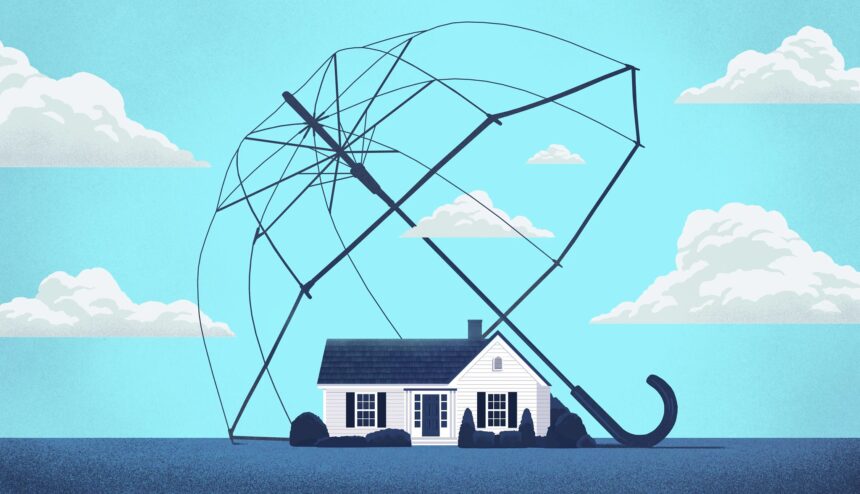
Liability insurance covers legal defense fees and any court-ordered settlements if you are found responsible for an injury. In 2025, liability claims are becoming more frequent and more expensive. Standard policies often start at $100,000 in coverage, but in a litigious society, this is rarely enough. Most financial advisors suggest a minimum of $300,000 to $500,000 in liability protection. For those with significant assets, an “Umbrella Policy” provides an extra layer of liability protection that sits on top of your homeowners and auto policies.
Medical Payments to Others (Coverage F)
This is a “no-fault” coverage designed for minor injuries that occur on your property. If a guest trips on your rug and needs a few stitches, Coverage F pays their medical bills regardless of who was at fault. This is intended to be a quick way to handle small incidents before they escalate into a full-blown liability lawsuit.
What Is Not Covered: Navigating the Exclusions
No homeowners policy covers everything. There are several major exclusions that every homeowner must be aware of to avoid a “coverage gap.”
The Flood Insurance Gap
A common and dangerous misconception is that homeowners insurance covers flooding. It does not. Damage from rising water, whether from a storm surge, a broken levee, or heavy rain, requires a separate flood insurance policy. With the 2025 weather patterns showing increased flash flooding even in historically low-risk areas, the National Flood Insurance Program (NFIP) and private flood insurers have seen a surge in demand.
Earthquakes and Earth Movement
Standard policies exclude damage from earthquakes, landslides, and sinkholes. If you live in a region prone to seismic activity, such as California or parts of the Pacific Northwest, you must purchase a separate earthquake endorsement or policy. Similarly, sinkhole coverage is often a separate requirement in states like Florida.
Maintenance and Wear and Tear
Insurance is designed to cover “sudden and accidental” losses. It is not a maintenance contract. If your roof leaks because it is 30 years old and has not been maintained, the insurance company will likely deny the claim. Issues like termite damage, mold (unless resulting from a covered water leak), and general rot are typically excluded as they are considered the responsibility of the homeowner to prevent through regular upkeep.
2025 Live Market Pulse: Trends and Statistics
As of December 2025, the insurance industry is showing early signs of stabilization after years of record-breaking premium hikes. However, the market remains “hard,” meaning insurers are being very selective.
State-Specific Insights
- Florida: Remains the most expensive state, with projected annual costs reaching $15,460. Recent legal reforms in the state have begun to reduce litigation, but the high frequency of hurricanes continues to keep premiums at record levels.
- California: Premiums are projected to rise by 21 percent by the end of this year. This is largely due to new modeling that allows insurers to price in future wildfire risks more aggressively.
- Louisiana and Oklahoma: These states are seeing some of the highest increases due to a high “loss ratio,” where insurers are paying out significantly more in claims than they are collecting in premiums.
The Role of Reinsurance
A major driver of your premium in 2025 is the cost of “reinsurance,” which is essentially insurance for insurance companies. Global reinsurance rates have climbed over 35 percent since 2022. When the cost for your insurance company to protect itself goes up, that cost is invariably passed down to you, the policyholder.
Strategic Enhancements: Endorsements to Consider
To truly customize your protection, you should look at specific “riders” or endorsements that fill common holes in standard policies.
- Water Backup Coverage: This covers damage if your sump pump fails or your sewer line backs up into your home. This is distinct from flood insurance and is one of the most common claims filed by homeowners.
- Service Line Coverage: Most homeowners do not realize they are responsible for the utility lines (water, sewer, power) that run from the street to their house. Replacing a collapsed sewer line can cost upwards of $10,000. This endorsement is an affordable way to cover that risk.
- Ordinance or Law Coverage: If your home is damaged and needs to be rebuilt, you must follow the latest building codes. These codes are often more expensive than the original construction. Ordinance or Law coverage pays the extra cost to bring your home up to modern standards during the repair process.
- Cyber Insurance: As smart homes become the norm in 2025, some insurers now offer endorsements to protect against cyberattacks, data breaches, and online fraud targeting your home network.
How to Lower Your Premiums in 2025
While costs are high, there are several levers you can pull to reduce your monthly expenses without sacrificing essential coverage.
Leveraging Smart Home Technology
Many insurers now offer significant discounts for homeowners who install “IoT” devices. Water leak sensors that can automatically shut off your main water valve, smart smoke detectors, and integrated security systems can lead to premium reductions of 5 to 15 percent. These devices not only save you money but also prevent massive claims from ever occurring.
Increasing Your Deductible
One of the fastest ways to lower your premium is to take on more of the initial risk. In 2025, the average deductible has risen by 22 percent as homeowners opt for $2,500 or $5,000 deductibles to keep their monthly costs manageable. However, you should only do this if you have the funds set aside in an emergency savings account to cover that amount if a disaster strikes.
The Power of Bundling
Combining your homeowners insurance with your auto or umbrella policy remains the most effective discount strategy. Most major carriers offer “multi-policy” discounts that can save you up to 20 percent across all your insurance products.
The Future of Home Insurance: AI and Risk Assessment
As we look toward 2026, the use of AI in underwriting will only increase. Insurers are moving away from general ZIP code-based pricing to “hyper-local” risk assessment. This means two houses on the same street could have vastly different premiums based on the age of their roof, the proximity of overhanging trees, and the presence of fire-resistant building materials.
Proactive homeowners who invest in “home hardening,” such as impact-resistant shingles or fire-resistant siding, will find themselves in a much better position to secure affordable coverage in the years to come.
Sources and Real-Time Data References
For the most up-to-date information on the 2025 insurance market, you can consult the following industry leaders:
- Insurance Information Institute (Triple-I): iii.org – Provides detailed reports on market stabilization and replacement cost trends.
- Bankrate: bankrate.com – Offers real-time average premium data by state and coverage level.
- Insurify 2025 Market Report: insurify.com – Projects premium increases and identifies the most expensive states for the current year.
- Verisk Analytics: verisk.com – Data on global natural catastrophe losses and construction cost indexes.